

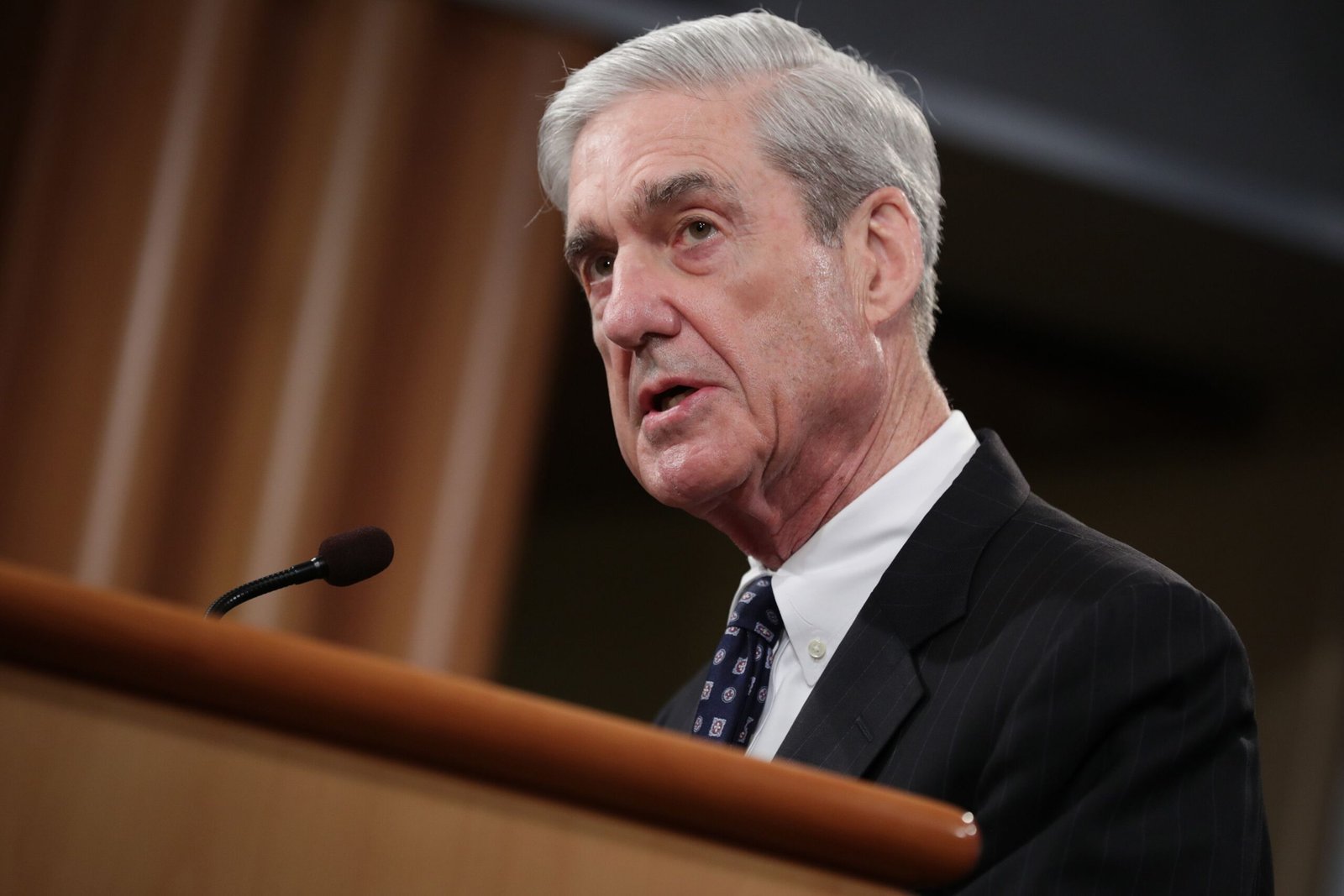
The United States has lost one of its most respected law enforcement figures as Robert S. Mueller III passed away at the age of 81. Mueller, known for his leadership of the Federal Bureau of Investigation and his role as special counsel in the Trump-Russia investigation, leaves behind a legacy defined by discipline, integrity, and public service.
His career spanned decades in government, during which he played a central role in shaping modern federal law enforcement and overseeing some of the most sensitive investigations in U.S. history.
A Transformational Leader of the FBI
Robert Mueller served as director of the FBI from 2001 to 2013, a period that included one of the most critical moments in American history—the aftermath of the September 11 attacks.
Appointed just days before the attacks, Mueller faced the enormous challenge of restructuring the FBI’s priorities. Under his leadership, the agency shifted its focus toward counterterrorism and intelligence gathering while maintaining its traditional law enforcement responsibilities.
He worked to modernize the bureau, improve coordination with intelligence agencies, and strengthen national security efforts. His tenure is widely credited with transforming the FBI into a more proactive organization capable of addressing evolving threats.
Leadership During National Crisis
Mueller’s leadership following the September 11 attacks remains one of the defining aspects of his career. He oversaw the FBI’s response to terrorism threats and played a key role in enhancing the agency’s capabilities to prevent future attacks.
During his time as director, Mueller emphasized accountability, discipline, and professionalism within the bureau. His approach helped build public trust in the FBI during a time of uncertainty.
Colleagues and officials often described him as a leader who prioritized duty over politics, focusing on the mission of protecting the United States.
Special Counsel in the Trump-Russia Investigation
After leaving the FBI, Mueller returned to public service in 2017 when he was appointed special counsel to investigate Russian interference in the 2016 U.S. presidential election.
The investigation, commonly referred to as the Trump-Russia probe, examined potential links between Russian actors and members of Donald Trump’s campaign. Mueller led a team of prosecutors and investigators in one of the most high-profile inquiries in modern U.S. politics.
The investigation resulted in multiple indictments and convictions related to election interference and other offenses. Mueller’s final report, submitted in 2019, provided detailed findings about Russian activities and the scope of the investigation.
While the probe generated intense political debate, Mueller maintained a reputation for conducting the investigation with professionalism and independence.
A Career of Public Service
Before becoming FBI director, Mueller served in several important roles within the U.S. Department of Justice. He worked as a federal prosecutor and held positions that involved tackling organized crime, terrorism, and financial fraud.
His background as a Marine Corps officer during the Vietnam War also shaped his approach to leadership. Those who worked with him often noted his discipline, focus, and commitment to service.
Mueller’s career reflected a consistent dedication to upholding the rule of law and serving the public interest.
Reactions to His Passing
Following news of his death, political leaders, law enforcement officials, and public figures expressed their condolences and paid tribute to Mueller’s contributions.
Many praised his integrity and the steady leadership he provided during challenging periods in U.S. history. Former colleagues highlighted his commitment to the principles of justice and accountability.
Across party lines, there has been recognition of Mueller’s impact on the FBI and his role in maintaining the independence of federal investigations.
Lasting Legacy
Robert Mueller’s legacy extends beyond his time as FBI director and special counsel. He is remembered as a figure who strengthened one of the nation’s most important institutions and upheld its credibility during critical moments.
His efforts to modernize the FBI and adapt it to new challenges continue to influence how the agency operates today.
For many Americans, Mueller represents a model of public service defined by professionalism, dedication, and respect for the law.
Conclusion
The passing of Robert S. Mueller III marks the end of a remarkable career in public service. From leading the FBI through a period of transformation to overseeing one of the most scrutinized investigations in recent history, Mueller played a significant role in shaping modern American law enforcement.
As the nation reflects on his contributions, his legacy as a principled and disciplined leader will continue to be remembered for years to come.